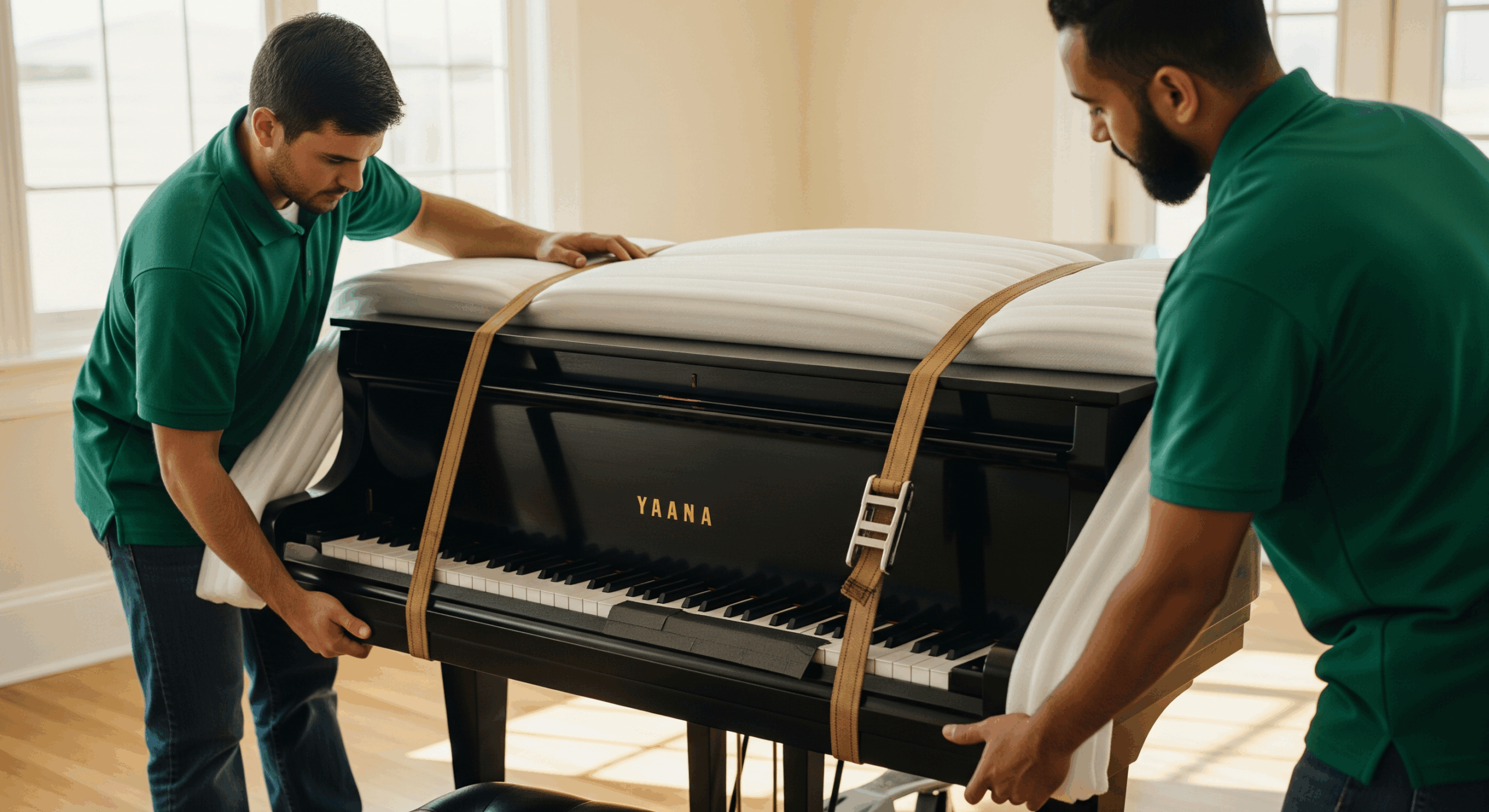
Moving a piano is nothing like moving standard furniture. Upright and grand pianos are heavy, delicate, and highly sensitive to impact, pressure, and temperature changes. This is why experienced piano movers follow specialized procedures to protect both the instrument and the property during transport. Understanding how professionals handle piano moves highlights why this task should never be treated as a DIY project.
Jump To :
TLDR Quick Guide
- Pianos require specialized equipment and trained piano movers
- Upright and grand pianos are moved using different techniques
- Proper wrapping and stabilization prevent internal damage
- Weight distribution and balance are critical during transport
- Professional handling protects both the piano and the home
Why Pianos Require Specialized Moving Methods
Weight Concentration and Fragility
Although pianos are solid instruments, much of their weight is unevenly distributed. Uprights carry weight vertically, while grand pianos concentrate mass in the harp and frame. Without proper handling, this imbalance increases the risk of tipping or internal damage.
Sensitivity to Vibration and Impact
Internal components such as strings, soundboards, and action mechanisms are extremely sensitive. Even minor jolts can affect tuning and performance. Professional piano movers minimize vibration throughout the move.
How Upright Pianos Are Safely Moved
Securing the Instrument
Upright pianos are carefully wrapped with moving blankets and protective padding. Movers secure lids, pedals, and keys to prevent movement. The piano is then stabilized on a heavy-duty dolly.
Controlled Transport Through Tight Spaces
Doorways, stairs, and hallways require precise maneuvering. Piano movers plan clearances in advance to avoid scraping or tilting. This level of care is often included as part of full residential moving services.
How Grand Pianos Are Transported
Partial Disassembly for Safety
Grand pianos are partially disassembled before transport. Legs, pedals, and lyres are removed and packed separately. The piano body is placed on a padded skid board for stability.
Strategic Team Coordination
Moving a grand piano requires coordinated lifting and positioning. Each mover has a defined role to maintain balance. Precision prevents stress on the frame and soundboard.
Packing Materials Make the Difference
Protective Wrapping Techniques
Professional movers use layered padding, shrink wrap, and reinforced straps. This prevents shifting during transit. High-quality materials are essential for safe transport.
Custom Crating When Needed
For long-distance or high-value moves, custom crating may be used. This adds another layer of protection against impact. Packing expertise like this often overlaps with professional packing services.
Transportation and Loading Best Practices
Securing the Piano in the Truck
Pianos are positioned against reinforced walls inside the truck. Load bars and straps prevent movement during transit. This protects the instrument from sudden stops or turns.
Climate and Route Considerations
Temperature and humidity changes can affect piano components. Movers plan routes and timing to minimize exposure. Shorter, smoother trips reduce risk, especially during local moving projects.
Why Experience Matters With Piano Movers
Skill Over Strength
Moving a piano isn’t about brute force. It’s about leverage, balance, and control. Experienced piano movers understand how to move safely without damaging the instrument or surroundings.
Reducing Liability and Risk
Professional movers are insured and trained for specialty items. This protects homeowners from costly mistakes. Expertise provides peace of mind.
Key Takeaways
- Piano movers use specialized tools and techniques
- Upright and grand pianos require different handling methods
- Proper padding and stabilization prevent internal damage
- Team coordination is critical for safe transport
- Professional movers protect both property and instruments
FAQs
1. Can regular movers handle a piano safely?
Only if they are trained piano movers. Pianos require specific equipment and experience. Standard moving methods increase the risk of damage.
2. Do grand pianos need to be taken apart to move?
Yes, partially. Legs and pedals are removed for balance and safety. This reduces stress on the frame during transport.
3. How long does it take to move a piano?
Time varies based on size, access, and distance. Uprights typically take less time than grands. Planning and preparation are key.
4. Will my piano need tuning after the move?
Usually, yes. Even with careful handling, movement can affect tuning. Most pianists schedule tuning after relocation.
5. Is piano moving expensive compared to regular furniture?
It can be more costly due to labor and equipment. However, the cost is small compared to potential repair or replacement expenses. Professional handling is a worthwhile investment.