Moving to San Francisco is not for the faint of heart. The city’s iconic hills, tightly packed neighborhoods, pre-war apartment layouts, and notoriously unforgiving parking rules make residential moves here uniquely challenging. That’s exactly why smart residents trust San Francisco residential movers who know the terrain, the regulations, and how to turn logistical nightmares into streamlined success stories.
Whether you’re relocating from a second-floor walk-up in the Mission District or downsizing into a Nob Hill high-rise, professional movers who specialize in the city can save you from damage, delays, and endless stress.
Jump To :
TLDR – Quick Guide
- What makes SF tough? Steep hills, cramped apartments, limited parking, and narrow staircases.
- Why hire pros? They understand permits, carry gear for vertical moves, and know the shortcuts.
- What do you get? Full packing, furniture disassembly, hoisting, stair navigation, and regulated parking management.
- Best option? Pure Moving Company offers residential moving tailored to SF’s unique layout.
- Need more support? Add packing services for a fully hands-off experience.
Detailed Breakdown: The SF-Specific Obstacles Movers Know How to Tackle
1. Apartments with Staircases, No Elevators, and Zero Loading Zones
Many San Francisco apartments—especially in neighborhoods like North Beach or the Castro—have narrow stairs, no elevators, and minimal loading access. Moving large furniture or boxes through these buildings isn’t just exhausting—it’s a logistical puzzle. Professionals assess the building layout ahead of time and plan for tools like moving straps, dollies, and padding to protect walls and woodwork.
They also bring the crew strength and experience to handle multi-floor moves efficiently and safely.
2. Parking Permits and Enforcement
The SFMTA requires Temporary No Parking permits for moving trucks parked on city streets. Without one, you risk a ticket—or worse, no space at all to unload. Pure Moving Company handles the permit process and posts signs in advance so your move doesn’t get derailed by aggressive parking enforcement or double-parking drama.
This isn’t just helpful—it’s essential when curb space is more competitive than downtown rent.
3. Hills That Demand Custom Equipment and Vehicle Planning
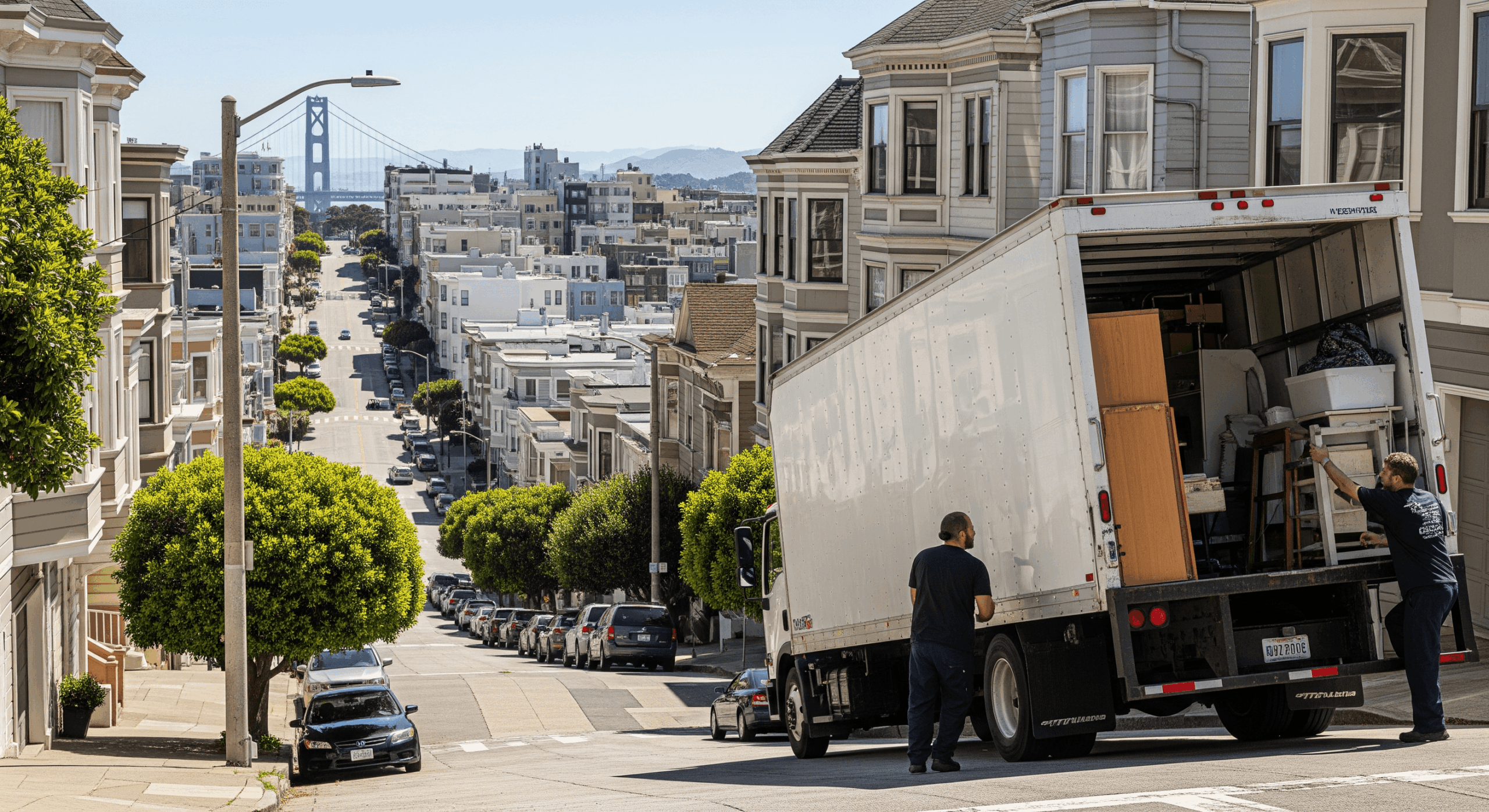
San Francisco’s slopes make truck placement, load balancing, and physical lifting much harder. Experienced residential movers bring low-clearance trucks, wheel chocks, and reinforced ramps designed for inclines. They know how to anchor vehicles safely while minimizing the risk of items shifting or rolling during the move.
Navigating hills isn’t optional—it’s a built-in part of every SF relocation.
4. Disassembly, Hoisting, and Tight Turnarounds
Sometimes, the only way to get a couch into a top-floor apartment is through the window. Movers trained in San Francisco-specific methods are equipped for hoisting furniture over balconies, disassembling oversized items, and reassembling them once inside. This saves time, reduces damage risk, and eliminates the guesswork of trying to squeeze an oversized piece through a 28-inch stairwell turn.
This level of care is especially important in historic buildings where damage to the property could lead to fines or landlord disputes.
5. Time Restrictions and HOA Regulations
Many residential buildings in SF impose time windows for moving—usually during weekdays, mid-morning to late afternoon. Movers coordinate with your property manager, elevator schedule (if available), and city regulations to align everything in a single move window. This tight coordination helps avoid delays, rescheduling fees, and frustrated neighbors.
Key Takeaways
- Moving in San Francisco is uniquely complex—thanks to its terrain, architecture, and dense layout.
- Residential movers trained for the SF landscape can manage everything from steep hills to third-floor walk-ups and strict parking rules.
- Permit handling, hoisting, disassembly, and truck logistics all require local experience and professional coordination.
- Companies like Pure Moving Company deliver full residential moving solutions that fit SF’s most challenging conditions.
- Add-ons like packing services can turn a stressful move into a totally streamlined operation.
FAQs
Why is moving in San Francisco so difficult?
San Francisco’s steep hills, narrow buildings, and limited street parking create constant challenges. Most moves involve stairs, tight corners, and strict timing rules. Professional movers manage these obstacles with specialized tools and local expertise.
Do I need a parking permit for my moving truck?
Yes. The SFMTA requires a Temporary No Parking permit for moving trucks parked on public streets. Your mover should handle this—Pure Moving Companyincludes it in their residential services.
What if my apartment has no elevator?
Professional movers bring extra crew and equipment like shoulder straps, stair sliders, and dollies. They also disassemble furniture when necessary to avoid wall damage. It’s all part of working efficiently in multi-story walk-ups.
Can movers hoist furniture into high-rise windows?
Yes, some moving companies offer hoisting services for furniture that won’t fit through doors or stairs. This is common in SF’s older or densely packed buildings. Pros are trained and insured for these high-risk maneuvers.
How early should I book movers in San Francisco?
You should book your movers at least 3–4 weeks in advance, especially during summer or month-end. Earlier booking ensures better time slots and lets your movers secure parking permits in time. Planning ahead saves you stress, fees, and potential delays.